




Protecting Your Welders from The Hazards of the Welding Process
If welding is part of your daily work activity, then the correct safety measures must be in place to protect welders from the hazards present when welding.
Thousands of people die from work-related lung diseases every year, in many cases due to exposures that took place many years before. Breathing in certain dusts, gases, fumes and vapours in the workplace can cause serious, long-term lung damage. – HSE.
By carrying out a risk assessment, you will be able to identify which measures are needed to control the risks associated with exposure to hazards, including welding fumes, welding arc and grinding dust.
Your assessment should take into account factors including:
- The welding process, work volume, and the amount of fumes generated
- The size of the component being welded
- The type of metal being welded (e.g., mild steel, stainless steel)
- The consumables used in the welding process
Controlling The Risk
There are several ways to control the risks when welding, including:
1. Minimise or Avoid Exposure
The first step in protecting workers from the health risks of welding fumes is to see if exposure can be avoided or reduced. Ask yourself: can the job be done in a way that produces less fume or dust?
Some strategies include:

- Automate or mechanise the process: using distance welding, turntables, or enclosing the work. At ESCCO, we offer Cobot Welding Packages, allowing you to protect skilled welders and automate your processes.
- Reduce the amount of welding where possible, or substitute with a different process.
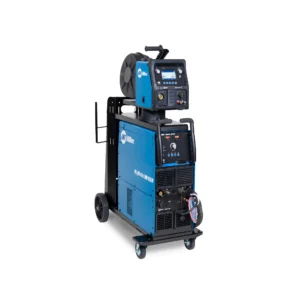
- Choose low-fume methods: for example, MIG welding often generates less fume than stick welding (MMA).
- Use cleaner metals and pre-prepared components: better machining or pre-fabrication can reduce dust and fume.
- Ensure that colleagues not directly involved in the welding process are not exposed to the hazards. This includes welding fumes, the welding arc and grinding dust.

2. Use an Engineering Control
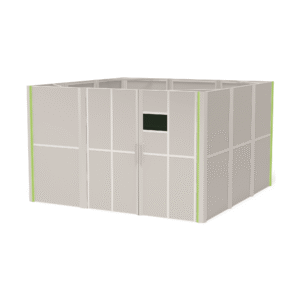
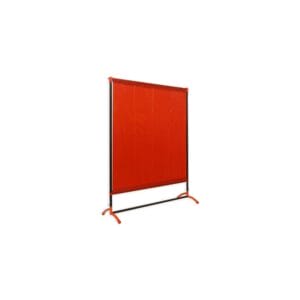
When welding can’t be avoided, the welding fume can be controlled by using local exhaust ventilation (LEV). Other hazards including dust and UV light, can be controlled by screens and barriers.
LEV is key to controlling fumes, especially indoors. LEV captures contaminated air at the source, helping protect both the welder and anyone nearby.
Common types of LEV include:
- Flexible arm capture hood
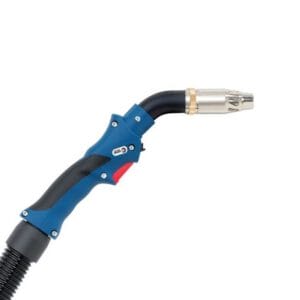
- On-torch extraction – For more information, view the latest on-torch video bulletin from HSE: https://www.youtube.com/watch?v=el9HwRPSNGk
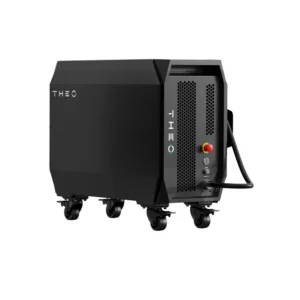
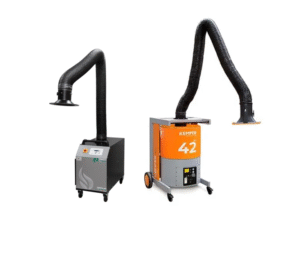
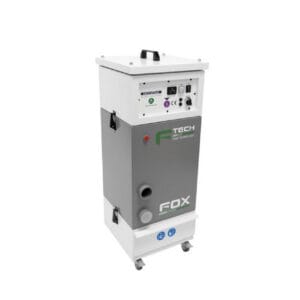
- Mobile and Portable LEV units
Other Engineering Controls: - General Ventilation
- Screens
- Barriers
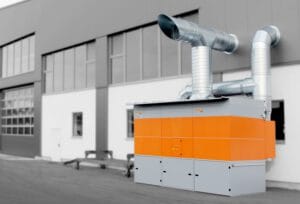
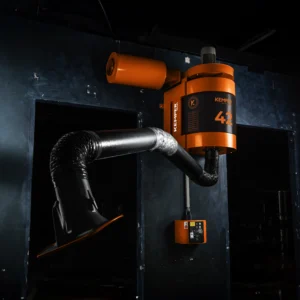
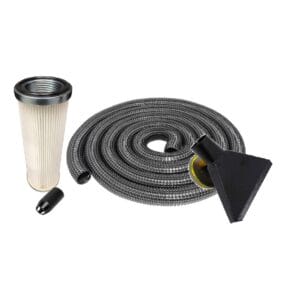
At ESCCO we specialise in LEV Welding Fume Extraction solutions, including On-torch Extraction, Central Extraction LEV Systems, Mobile LEV Systems, and Wall Mounted Filter LEV Systems.

3. Provide Suitable Respiratory Protection (RPE)
To keep your workforce safe, you should supplement the LEV controls with appropriate respiratory protective equipment (RPE), because the LEV cannot always be 100% effective.
For example, if you can still see residual fume or smell ozone during TIG welding, the risk isn’t fully controlled. In these situations, RPE becomes essential to safeguard your workers.
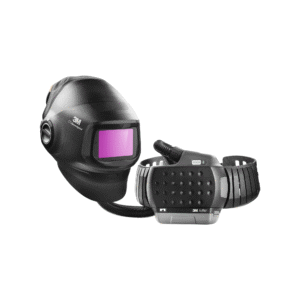
At ESCCO, we offer a range of Welding Helmets, Air-fed Visors & Accessories from brands like ESAB & 3M to ensure your welders are protected.

Useful Links
HSG258 – https://www.hse.gov.uk/pubns/books/hsg258.htm
HSE Bulletin – https://content.govdelivery.com/accounts/UKHSE/bulletins/407e41e
ESCCO – Your LEV Specialist
Please contact the ESCCO team with any questions you have regarding Welding Safety. Our team will be happy to assist you.
01432 346190 sales@escco.co.uk


